Vistas & Byways - Spring 2022
  • CONTENTS
    • IN THIS ISSUE
    • Fiction
    • Nonfiction
    • Poetry
    • Bay Area Stew
    • Inside OLLI
    • Photo Essays
  • ABOUT US
  • CONTRIBUTORS

NONFICTION        

Some Churches in the Ukraine  -   M. N. Pepys                                    

Unexpected Adventures of an Election Observer
in Mongolia and Ukraine

by  Mary Noel Pepys

AUTHOR’S NOTE:
I wrote this essay before Putin’s invasion of Ukraine and am outraged by his war. I lived in Kyiv, Ukraine and have worked throughout Ukraine developing the rule of law for the American Bar Association and the U.S. Department of State. My heart is heavy for all Ukrainians, particularly my friends and colleagues, and for those Ukrainians I met during the 2004 Ukrainian presidential election in Sumy, Ukraine. ​
​Many courts across our country have debunked the Big Lie about the 2020 presidential election fraud. But years earlier there was no need for a big—or even a little—lie concerning the 2004 Ukraine presidential election. Election fraud was rife throughout the country. I know because I witnessed it firsthand as an international election observer. It was not what I expected. That’s because when I observed Mongolia’s 2000 parliamentary elections four years earlier, I was dazzled by the voting procedures in a country of nomads.
 
As an international attorney developing the rule of law in post-communist countries, I was selected in 2000 to be an election observer for a nonprofit organization based in Washington, D.C. that was committed to advancing democracy worldwide. I was thrilled to be assigned to Mongolia, a fascinating country where I had previously worked to enhance the judicial system.
 
Returning to Ulaanbaatar, capital of Mongolia, felt like coming home. I walked the streets free of a tourist map and joined local friends at my favorite restaurants eating Mongolian style pizza and drinking delicious Mongolian beer.
 
The two-day briefings of our responsibilities as election observers left me with a deep sense of accountability to the electoral process. Seven decades of communist rule in Mongolia ended ten years earlier, giving Mongolians the belief that voting in a democratic society is a privilege. They could now freely vote for any candidate rather than candidates preselected by the Communist Party. 
 
Little did I anticipate the surprises that would await me. I joined a two-person team in Ulaamgon, a city on the slopes of the Kharkhiraa Mountains in western Mongolia, thrilled to be going where I had never been before. On election day, we went to our first precinct to observe the voting process, voters and election officials. We watched nomadic Mongolians, dressed in the traditional del—an oversized coat tied with a colorful sash—patiently standing in a long line eager to vote. After an hour, I thought being an observer was an easy assignment since we saw no election irregularities. 

1


​We were then invited to accompany election officials delivering a ballot to a woman unable to travel. To reach her home, it took two hours driving off-road over dry, barren landscape of sand and plateaus. I watched our driver with astonishment as I could not understand how he knew the direction. What clues did he have to bear left or right in the middle of nowhere without any landmarks, streets, buildings, trees or signs? He reminded me of trackers on African safaris whose sense of direction comes from spotting animal footprints.
 
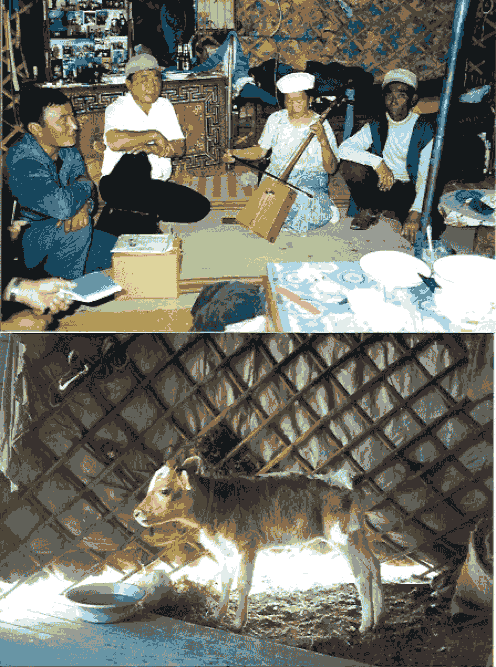
We arrived at her ger (yurt), a portable, circular dwelling covered in felt, and greeted her and her companion, a baby goat, inside her ger. Why not, I thought? Cats and dogs live in American homes. Traditionally hospitable, nomadic Mongolians treat strangers as guests. After we sat down on short wooden stools, she offered us delicious home-baked butter cookies, called boortsog, and airag, fermented mare's milk. I should have taken a tiny sip as I knew from experience what would happen. But I was excited to be there and forgot. One gulp and I gagged from the unpalatable sour taste. It was a diplomatic blunder, and I felt terrible.
Picture
A MONGOLIAN VOTER'S HOME - M N Pepys

2


When it was time for her to vote, she treated it with fanfare. Picking up a Morin Khuur, a traditional nomadic two-string instrument, she began to play and sing. Such jubilation—for both of us. Voting was as ceremonious to her as it was with other Mongolians who wore their traditional dels to vote. I felt my eyes tear up. How could I be so fortunate to witness this heartfelt ceremony, I asked myself? Yet I knew, after years of international work and travel, that such unique experiences emerge when I take risks and explore the unknown.
 
Slowly and methodically, she reviewed the ballot and voted, telling us, through an interpreter, her thoughtful opinions of each candidate, determined to make a difference in the outcome of the election. Turning to my team member, I said with a sigh “if only all voters had such commitment.” He nodded. She inserted her ballot in the secure, yellow ballot box that we brought. My tears began again as she epitomized the solemnity of voting.
 
As we were leaving her ger, I thought about the efforts expended by Mongolian election officials for just one voter. How many other voters were treated the same way? It seemed unrealistic, maybe even nuts. Or, perhaps it was just as genuine as I envisioned it to be. I was curious and wanted to ask questions, but as observers we were prohibited from intervening or questioning officials and voters about voting procedures. It was hard to restrain myself from seeking an explanation to such a perplexing, time-consuming procedure. But all I could do as an observer was just that, observe, and then write a report of my observations. Nothing more.​

3


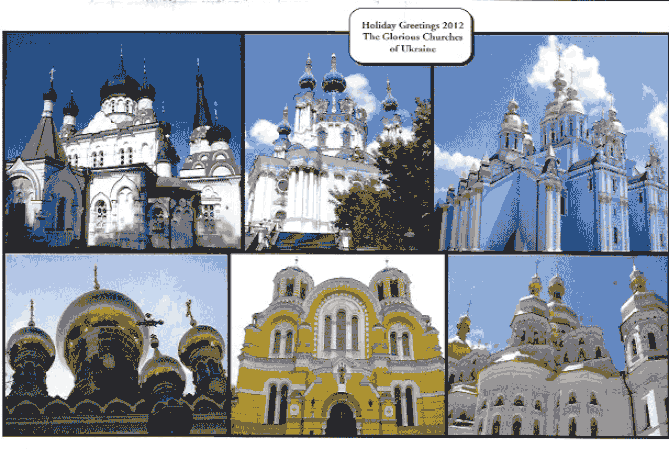
Based on this experience I was asked four years later to observe the 2004 presidential election in Ukraine. I had lived in Ukraine in 1997 to help develop the rule of law and was glad to be returning. The capital city of Kyiv is one of Europe’s oldest cities. It is a mixture of medieval architecture, gold-domed churches, and massive Soviet governmental buildings signifying the supremacy of the Communist Party. Walking by any of these buildings always made me feel insignificant. I imagined how powerless Ukrainian citizens must have felt during the Soviet regime. ​
Picture
THE GLORIOUS CHURCHES OF UKRAINE - M N Pepys

4


Once the Soviet Union collapsed, Ukrainians, like citizens of all other former communist countries, became capitalists overnight. In 1997, there was a bevy of Western-style restaurants. One restaurant had huge images of Marilyn Monroe adorning all its walls. Strange, I thought, as I’ve never seen such a restaurant in the U.S. Another touted its authentic Tex-Mex food. Yet, for a California girl like me, the only thing that made it similar to a Mexican restaurant was the menu, certainly not the ingredients. Imagine eating nachos with potato chips instead of corn tortilla chips? By 2004, emulation of the West had mushroomed. Starbucks-like coffee shops had sprung up which was a welcoming sight to a cappuccino-addicted election observer. My morning coffee choices between black or with milk in 1997 soared with a myriad of concoctions by 2004.
 
In Kyiv, I was assigned, once again, to a two-person team. We were asked to observe the election in Sumy, the capital city of the Sumy Oblast (region) located in northeastern Ukraine close to the Russian border. The five-hour road trip from Kyiv was exceedingly boring. Five hours of nothing. Finally, we arrived in Sumy, which was home to the then Ukrainian Prime Minister Viktor Yanukovych. Sumy’s citizens were expected to support Yanukovych over the opposition candidate, Victor Yushchenko. Yet the day before the election, 80,000 people attended a large rally and concert in support of Yushchenko. We watched the crowd with excitement and wondered if these Ukrainian voices of opposition which were silent under communism would now be heard.
 
On election day, we left our hotel before sunrise. Our first polling place was located at the Sumy National Agrarian University and by the time we arrived, the University was crowded with hundreds of students. We watched a university official hovering over the large, clear plastic ballot box staring at each student who slowly slipped the one-page, unfolded ballot into the ballot box. The students’ eyes would meet the gaze of the official to confirm he witnessed their vote for Yanukovych.
 
It pained me to watch since it was obvious that rather than vote as they wished, some students had been coerced by undue pressure, or perhaps a bribe, to vote for Yanukovych. I was dejected observing them, wondering if any had attended the rally for Yushchenko. How did they feel voting against their choice for president? Many other questions my team member and I wanted to ask the University official and students but as observers, we could not. We left the polling place frustrated and feeling powerless.   

5


Throughout the day—which lasted beyond midnight—we went to several other polling places and saw various levels of voting irregularities. On our way back to our hotel, we were summoned to a voting precinct at 1:00 am. Even though I was committed to my election obligations, I desperately needed to sleep. But there were serious allegations of illegal vote counting so we headed to the precinct. The guards tried to prevent us from entering by blocking the doors. Finally, they allowed us to enter, probably because they were just as tired as we were and gave up resisting us. Even at that hour, several members of the precinct’s voter commission were angrily accusing the chair of the commission of having stuffed the Yanukovych envelope with ballots supporting Yushchenko and the other candidates. ​​

Emotions were running high and so were mine. I was irritated by the number of questionable election procedures I had witnessed during the day, and was concerned for the Ukrainians whose voices I was certain were muted. With a knee-jerk reaction, I requested a recount. “The international election observers should ensure the vote count is fair,” I said with an exasperated voice to the Chair, a woman named Olga. I was surprised by my behavior as I had no such authority. But I was outraged. She acquiesced to my request, which she obviously viewed as a demand or perhaps, like the guards, was just too tired to argue.
 
She angrily tore open the envelopes, one for each candidate, poured all the ballots into a large pile, and sat off to the side while other members of the commission recounted the votes. The ballots began to pile up next to the Yushchenko envelope and I breathed a sigh of relief that my inappropriate request for a recount was not in vain. Yushchenko won the precinct by 200 votes.
 
After the recount—after such an excruciatingly long day—I could not wait to return to the hotel. But just as we were about to leave, Olga invited me to have a cup of chai with her. She wanted to explain what happened. It’s now 17 years later and I still feel the same empathy I had after hearing her story. Olga was a local teacher and was fearful of being fired if Yanukovych, the government-backed candidate, did not win the vote in her precinct. As a single mother with school-age children, she had no other income or financial resources. She loathed that her moral standards had to be compromised, but she had no alternative.
 
“I had to lie to survive,” she cried as she told me.

6


In just one-half hour, my feelings toward her changed from being angry at her illegal behavior to being empathetic to her political predicament. I then began to worry for her. Would my self-righteous behavior requesting a recount jeopardize her career? Because of my request, she was unable to deliver the votes for Yanukovych as she was instructed to do. I had a painful feeling that she would wake up the next morning without a job. With a heavy heart, I gave her a warm hug and we parted ways.

​On our way back to at the hotel, I thought about the University official whose behavior I despised in silence. Was his academic position also in danger? Did he feel compelled to intimidate the students so they would vote for Yanukovych? How many other election officials worked under duress to manipulate voting procedures and election results? 

 
After returning to Kyiv, my team member and I joined the other election observation teams and learned that governmental intimidation of the opposition was widespread throughout Ukraine. Eventually, Ukraine’s Supreme Court overturned the disputed presidential election deeming it marred by systemic and massive violations and ordered a runoff. As a result, Victor Yushchenko was inaugurated as President of Ukraine in January 2005.    ​

I did not anticipate having such disparate adventures observing elections in Mongolia and Ukraine. The contrast between utopia and dystopia was startling, and my emotions ran the gamut from amazement to disgust. I had spent a decade developing the rule of law internationally and was unprepared for my whiplash of feelings over a sacrosanct right of a citizen. Witnessing an unfathomable amount of effort to ensure the vote of just one voter in Mongolia against a broadscale suppression of the voters’ choice of candidate in Ukraine convinced me of the fragility of voting rights that, regrettably, is on trial today in the United States.   

7

Picture
Vertical Divider
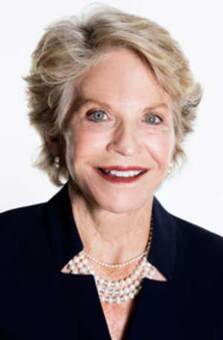
​Mary Noel Pepys is a senior attorney with a specialization in the rule of law, specifically international legal and judicial reform, and corruption within the judiciary. Since 1993 she has helped emerging democracies develop justice systems that ensure the protection of citizens’ human rights, equal treatment of all individuals before the law, and a predictable legal structure with fair, transparent and effective government institutions. Mary Noel has worked in over 45 countries, lived five years in six former communist countries, and 20 months in Afghanistan as the Justice Advisor for the Bureau of International Narcotics and Law Enforcement of the U.S. Department of State. While in Afghanistan, Mary Noel focused on strengthening the criminal justice system and the correctional system.
Vertical Divider

We Welcome Comments

Submit
Fiction
Bay Area Stew
Nonfiction
Inside OLLI
POETRY
Photo Essays
Picture
Vistas & Byways Review is the semiannual journal of fiction, nonfiction and poetry by members of Osher Lifelong Learning Institute (OLLI) at San Francisco State University​.​
Picture
Vertical Divider
​Osher Lifelong Learning Institute at San Francisco State University (OLLI at SF State) provides communal and material support to theVistas & Byways  ​volunteer staff.

Contact the V&B
  • CONTENTS
    • IN THIS ISSUE
    • Fiction
    • Nonfiction
    • Poetry
    • Bay Area Stew
    • Inside OLLI
    • Photo Essays
  • ABOUT US
  • CONTRIBUTORS